SPX 0DTE live trading today

Here is something I found today that someone may find it helpful
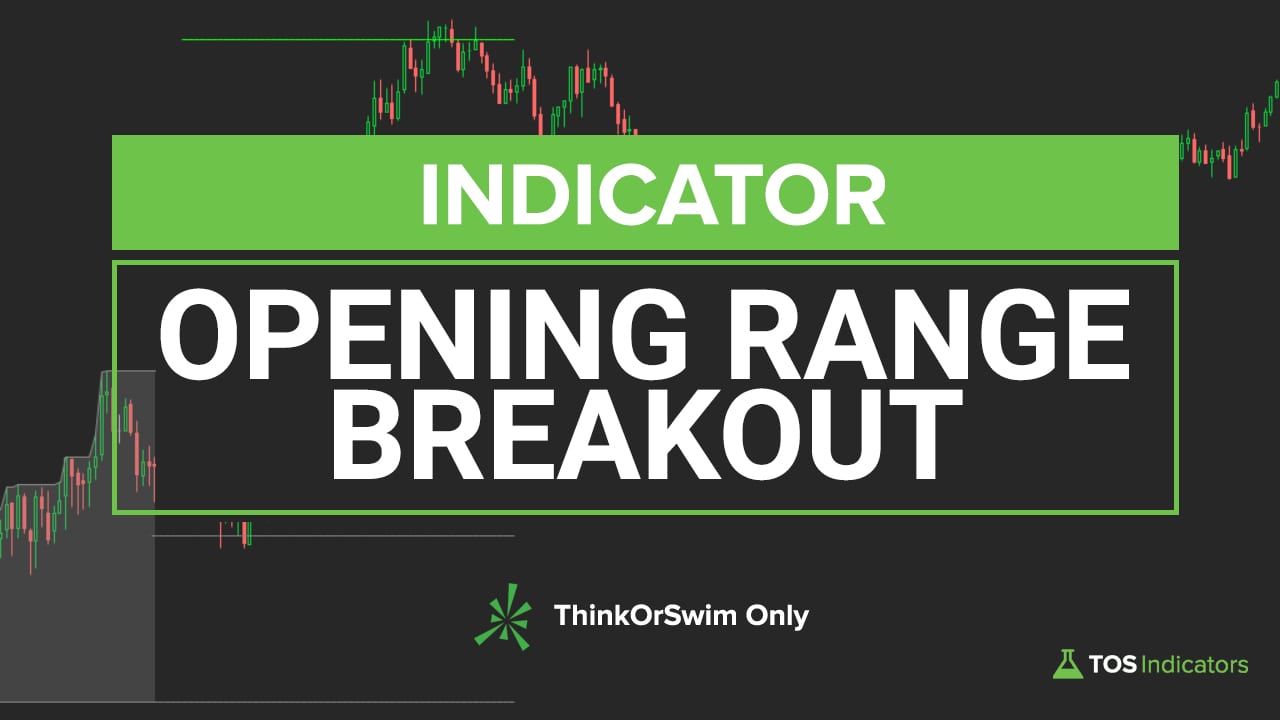
It's an indicator that shows the opening range on the chart
I installed it just as an exercise on learning a little more about thinkscript programing
Not sure if it's useful for the 0DTE trades that we are doing since we go in the opposite direction of the breakout but it looks interesting
The opening range can be adjusted
 
Nice find on that indicator.

I think it's useful but I'm also torn about using some trader's experience to help define a range/direction. I also like Scott Ruble's approach with looking for ledges (or shelves or congestion... a rose by any other name...) and making a trading decision based on price action.

I will keep looking for ways to optimize of course but keeping it simple also has advantages.
 
I was wondering if it would be worth it to place an iron condor on a day like today where SPX was trading in a tight range
I just placed one as a simulation with 4 delta on each side collecting 0.45 cents total and it worked out well but it may not be a viable trade when it starts to go in one direction although I am thinking if I butterfly off the threatened side quickly enough it could lock in a 0.25 cent profit and even more if it goes into the fly tent
 
The FOMC minutes typically don't move the markets too much. I think a condor was a good trade today. Although the ATR is pretty high lately (~90). You would need a lot of room and have some risk management in place.
 
Maybe a call dragonfly would have been good for today's action
I placed one as a simulation 3575/3585/3590 for 1.75 debit It shows about $240 profit with this big push up from 3540 to 3600
 
The dragonfly worked out very nice Made $325 profit all ITM
Of course it would only work on days like this where it gaps down hard and than tries to fill the gap
There is another gap above at 3739 that may get filled tomorrow after that it's anyone's guess
 
status1, congrats on dragonfly, even if it was a paper-trade only.
One way to make DFly work is to find days like this one. I find it hard to achieve on a long run.
The other way is to find days where conditions are good for DFlys to fly and if, at the same time, they are met with you expecting good winds in the market - even better better. Chance for success increase.
If you prefer to put DFlies randomly you may get excellent results mixed with bad ones but they are random results, even if you think there is some pattern (ie using BT). I'd be very careful with drawing conclusions about DFly based on that alone.
Same goes for IronCondors.

I there any specific reason you put DFly on today?
 
One way to make DFly work is to find days like this one. I find it hard to achieve on a long run.
I agree with that
The reason for placing the trade was because of the big down opening and usually it tries to fill the gap at least partially if not all the way so I had a good sense of direction Most of the time I can't tell which way it's going to go or at least it may not go too far in the same direction

It was exactly the opposite the day before when it was in a tight range so an iron condor was better trade for that day
 
This is a good reason for putting DFly. It is also not so bad to put it on papertrade, once or two, to observe how it behaves and how you react to it.
I do trade it from time to time but not too often. I see it as a variation for trades that are composed from 2 verts rather than a rigid structure.
This morning or yest close was a good point to put BillyBaroo (which will be a subject of next 101(?) and which is yet another mutations of 2vert trades) - good to put for the same reasons you started long delta trade yesterday morning.

If you have some general observations about DFlies i gladly hear them.
 
Not many observations so far Main thing is to have patience and watch the price action and let it work
I was tempted to close it at one point when looking at the 1 min candles but looking at the 2 min candles it was not looking like it was going the other way too fast
Hard to say if I had that same patience if it was a live trade

It was easy so far because of 2 big moves one up yesterday and another one down today With smaller moves it's probably not worth it and might have to choose a different strategy but you don't know what kind of trade you will have at the beginning of the day
Today it was kind of predictable after the huge move up yesterday I suspected SPX may go down and take back about 50%of the move

The main thing I wanted to learn is what is the optimal placement of the Dfly and when and how to adjust in case it goes the other way It's easy to say to just flip the trade but by then you are locking in a loss and than you just fight it the rest of the day

At least I can have a lot of practice when I am doing daily trades
 
Right. I suppose (it's an opinion only) DFly is not a good strategy for daytrading. You don't have much time to be right. The big move up could have come today and, if so, your DFly would be no good.

I do not remember trading DFlies as daytrades myself but did end up with this structure while managing. E.g. I can put long call vertical 10+ points wide or 2 long call verts and, after some move up, I can partially spread it with short call vert. This action may result as DFly (or DFly like) structure.I think that if playing directional daytrades, plain verts are prefered over more complicated constructions, but it is beneficial to be familiar with all of them and train your brain-muscle memory.

"Where to put them?" is an excellent question in trading. It should follow right after other one: "When to put them?
 
I suppose (it's an opinion only) DFly is not a good strategy for daytrading.
I agree with that normally but with moves like on this past 2 days it works nice assuming I get the right direction
It's not much worse than the short vertical the other folks are doing with Tom Henley trading style
The only negative I see is the negative theta so it's not going to work if SPX is not moving in the right direction fast enough

The risk is much less 120-140 compared to 450 but the idea is not to leave it on the entire day it's just to make a few bucks per day
The other folks are getting about $10-$35 per day so I am thinking if it moves in the right direction enough I could butterfly it off and hopefully make it a free trade with a lottery ticket or at least make the risk a lot less and than perhaps add another credit spread to make it even less or a profit at the end of the day but I would have to keep an eye on it the entire day or at least until I get the expiration above 0

Also if I butterfly it off I would not have to close it the same day and avoid the the PTD rule unless it has a lot more profit in which case I would box it off

A couple of months ago I had a longer trade about 60 DTE and after managing it with all the runaway up and down I manged to make a profit of less than $60 which is better than a loss but I figure if I can make even half that per day I would be way ahead after 60 days
 
I agree with that normally but with moves like on this past 2 days it works nice assuming I get the right direction
It's not much worse than the short vertical the other folks are doing with Tom Henley trading style
The only negative I see is the negative theta so it's not going to work if SPX is not moving in the right direction fast enough

Imo long vertical (not short you mentioned) is generally preferred over DFly (means: I like it better) but there are situations where DFly may be a better choice. Much depends on where you want to put them (level of risk) and on your management. In any move in your favor you can always add short call vert ( the back side of DFly ) for better price, and actually this is one of common techniques to manage long verts ( both on put and call side.).
DFly beats long spreads if market stays about unchanged or move against you.
Short vert you mentioned, and what people are using is something I simply dont like. If you remember hype for IC few years ago or RTT story then you can understand my reservation. You take big risk on for small profit potential. It may work but it is not my style. I'll be observing with interest how those trades go and gladly learn new stuff.
For daytrading, ( again: imo ), grreks do not matter much or even do not matter at all. We likely disagree here - which id fine. Greeks or not all it matters is how you manage it. If greeks help you with that - fine.

Remember that my experience with DFlies is on longer dtes I may overlook smth obvious in 0DTE.
 
In any move in your favor you can always add short call vert ( the back side of DFly ) for better price, and actually this is one of common techniques to manage long verts ( both on put and call side.).
I understand it's just that in order to do that I would have to start with a 10 wide at a minimum for the spread so that would be a bigger debit and if it goes against the trade I would have to adjust sooner
 
I tried your method this morning and it worked out well I put on a 10 wide PDS and around 10:50 there was a decent size down move so I butterflied it off an have a guaranteed profit $75 with no risk and currently the T+0 is at $129 if I would box off the trade
I am also watching an IC just to see how it will work out as it seems we are having a tight trading range at the moment

When you do a DS do you have a certain stop loss or mental stop where you would either close or adjust the trade or is that subjective ?
 
I understand it's just that in order to do that I would have to start with a 10 wide at a minimum for the spread so that would be a bigger debit and if it goes against the trade I would have to adjust sooner
When placing opening trade yo don't have to do anything. YOu can do whatever you want. If you want 10 pw spread - do it if you want 50pw - do it, if you want 5pw (points wide) - nothing will stop you from doing that (except yourself).
Same thing about where to place your trade.
You are right about managing - you should manage your trades individually, not by any fixed rules (there should be caveat raised here). If your risk is different on some traders - you manage them differently (usually :) )

I tried your method this morning and it worked out well I put on a 10 wide PDS and around 10:50 there was a decent size down move so I butterflied it off an have a guaranteed profit $75 with no risk and currently the T+0 is at $129 if I would box off the trade
I like that. Now you can manage this farther or leave it alone and start something new (having this one as an anchor). Which way to choose? Whatever - the difference is mostly psychological.

But remember do not judge a trade after a single success or failure. Learn what the trade can offer and use it accordingly.

When you do a DS do you have a certain stop loss or mental stop where you would either close or adjust the trade or is that subjective ?
Hmmm. I don't want you to treat what I say as a trading advise. I share how I approach to trades which may be not optimal for you.

I assume DS is a debit spread (aka long put spread).
First, I rarely daytrade. Second, it depends (my favorite answer) and it is mostly a subjective call.

It depends on my patience or time availability at the moment to watch the screen, on dte, on my other positions etc. Most important is (I suppose) dte.If it's very short and probs are slim I may close the trade for the best price I can but normally I' prefer to spread of the risk and leave some kind of "lottery ticket on".
This is what happened to my DFly Iately ~recklessly put on couple days ago.
Market wend against me right away - I could close it down but instead I sold some call verts to stop bleeding and now I'm left with expensive BF (sort of) means I still have a chance to make up the loss on this trade. Again, there is nothing written in stone - next time in similar situation I can decide to close the trade or to hang on it to the end.

Oh, I need to add this. The most important factor when deciding what to to with a trade is risk it carries (which also depends on dte ... etc)
 
Last edited:
YOu can do whatever you want. If you want 10 pw spread - do it if you want 50pw - do it, if you want 5pw (points wide)
I only referenced the 10 wide min in relation to the Dfly because if I start with a 5 wide DS than adding as short vertical 5 wide would make it a regular fly not a Dfly
I assume DS is a debit spread (aka long put spread).
First, I rarely daytrade. Second, it depends (my favorite answer) and it is mostly a subjective call.
That's what I figured I just thought there may be a best practice something like if you make 50-100% of the debit spread to either close the trade or butterfly it off or if the loss is 50% or more of the DS than close the trade or make an adjustment I guess no one made any back testing to see what is best
I guess I just have to go with a gut feeling based on the price action at the moment

It's a little early but looks like I made the right decision to butterfly off the trade as it never went any lower
The IC is also doing well and could be closed at $110 out of the max of 120 at expiration
 
I do not trade 0-1 dte presently. It can be a mistake as movements there are promising (like the one we have right now).

Some folks do like so called "high prob, low RR ( reward/risk )" trades.

I mentioned before I see them problematic.

One thing is that most traders, at least those I have contact with, get trading probabilities wrong aka making wrong trading decisions when relaying on 'prob of success" or "prob of touch" or anything like that. This is my personal conviction and I don't want to impose my views on anybody.
There is another, maybe more practical, way of thinking about this problem.
If we have environment with sizable daily moves (like we have today) then placing low RR trades (regardless of what prob number shows) can have two main outputs: small, and pretty secure, gains if market moves in your direction or big losses if it moves against you.
Of course picture is little different when tight risk management is put in place but all of those efforts are to protect from big loses for small wins or break evens.
With 'low prob, low RR' you can not "let your winners run", because there isn't room to run in the first place, when at the same time you may and up "cutting the loosers" relatively often(50/50?). What lures you into those setups, I assume, is this "low prob" number.

The good side is that one can learn good risk management practices pretty fast.

Here is an article trying to explain why we have, and likely to have it for some time, those big daily moves:
www.zerohedge.com/markets/unprecedented-weaponized-gamma-nomura-explains-why-week-has-been-such-hot-mess

I'm not to discourage, not trying to stop anybody from doing "low prob, low RR" trades ( they do have some values and for what I observed they are usually done right: small with eyes on the ball all the time), but rather to share my pow and listen to opinions of others.
 
Last edited:
I'm not to discourage, not trying to stop anybody from doing "low prob, low RR" trades ( they do have some values and for what I observed they are usually done right: small with eyes on the ball all the time)

I think the DS trades seem more profitable if placed at the right time and using the right strikes The other traders in the morning group are trying to take advantage of the opening breakout range and place a CS on the opposite side and wait for SPX to keep moving in that direction and also for some theta decay

I am trying to place a DS close to one extreme or the other that way the risk of keep going in the same direction is somewhat minimized and a small pull back can bring in quick profits The trick is to get in at the right time and get out when SPX is trying to turn around again or you made enough profit

The other traders are entering a CS around 12 to 15 delta trying to risk 450 to make 50 on a 5 wide
I tried entering a DS at 20 delta and also at 45 delta Not sure which one is better
For the 20 delta I paid 160 to make 840 on a 10 wide for the 45 delta I paid 415 to make 585 also on a 10 wide

Currently the 415 DS is showing a profit of 399 so almost 100% gain and the 160 DS is showing 285 profit which is more than 100% profit
I can either close it or butterfly it off and have a risk free trade for the rest of the day so it can be quite profitable given the right circumstances
 
Top
Contact Us