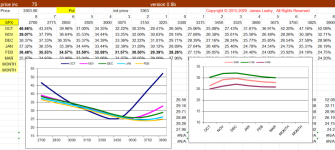
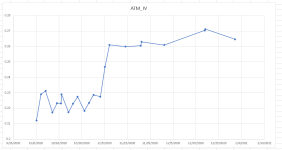
The VIX futures 'hump' does not indicate that Nov skew should be above/below Dec or Jan (although it can). So there is hardly anything to 'reconcile'.
my reasoning for this is based on my assumption that the market is setting
up for a binary event in november. i'm comparing this with other binary events
i'm very familiar with, namely, quarterly earnings. in the weeks, days preceding
earnings, the vols in several option series that expire after the earnings date
start rising. the effect extends much farther out in time than you would expect,
but each subsequent expiration rises by an exponentially decreasing amount. if you
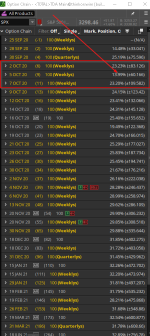
look at the volatility profiles of these stocks, you will see the curve of the front expiration rise
above the subsequent ones. this happens in virtually all stocks, or at least,
all the ones i trade. after the earnings release, the vols usually quickly
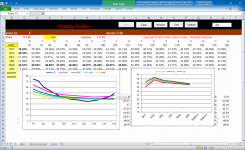
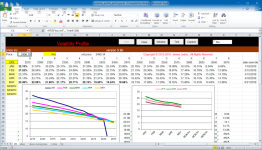
return to normal. this is the vol profile for aapl. earnings are on nov 4th.
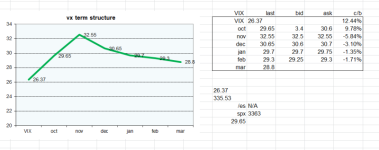
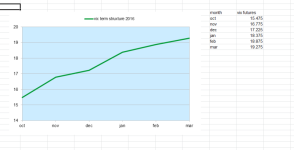
as far as the vix futures hump in november is concerned, while there is no
fair value that can be calculated for the vix futures, it is a bet by traders
of the expected value of the vix at expiration (the vix futures settle to
the value of the cash index). the term structure indicates a similar behavior
to an earnings situation, with the expected value of the vix to fall after
the binary event.
i realize, also, that the spx iv value of any strike can't be calculated
from the vix, but implied volatilities and the vix are correlated.
http://blog.harbourfronts.com/2019/03/28/differences-vix-index-money-implied-volatility/
just for background information, i looked at the 2016 election binary
event, and it didn't set up like the current one. the vix futures term
structure was in contango, and the volatility profile was also very different.
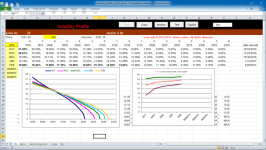
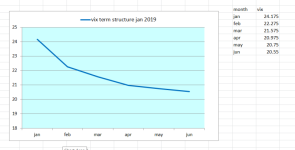
and for completeness, i looked at the vol profile the last time the vix futures
were in backwardation, jan 2019. you can see that the vol curves indicate
a falling iv in subsequent months.
as far as how do we position for it? one of the ways i trade earnings is to sell
high volatility and buy low volatility as a diagonal spread (weighted vega
in action). this limits risk, but you have to pick a direction. you can
generally handle a 1 standard deviation move against your assumed direction
but you'll have to wait to see how the volatilities resolve before the election.
there's currently not enough differential in the months to do this trade.